
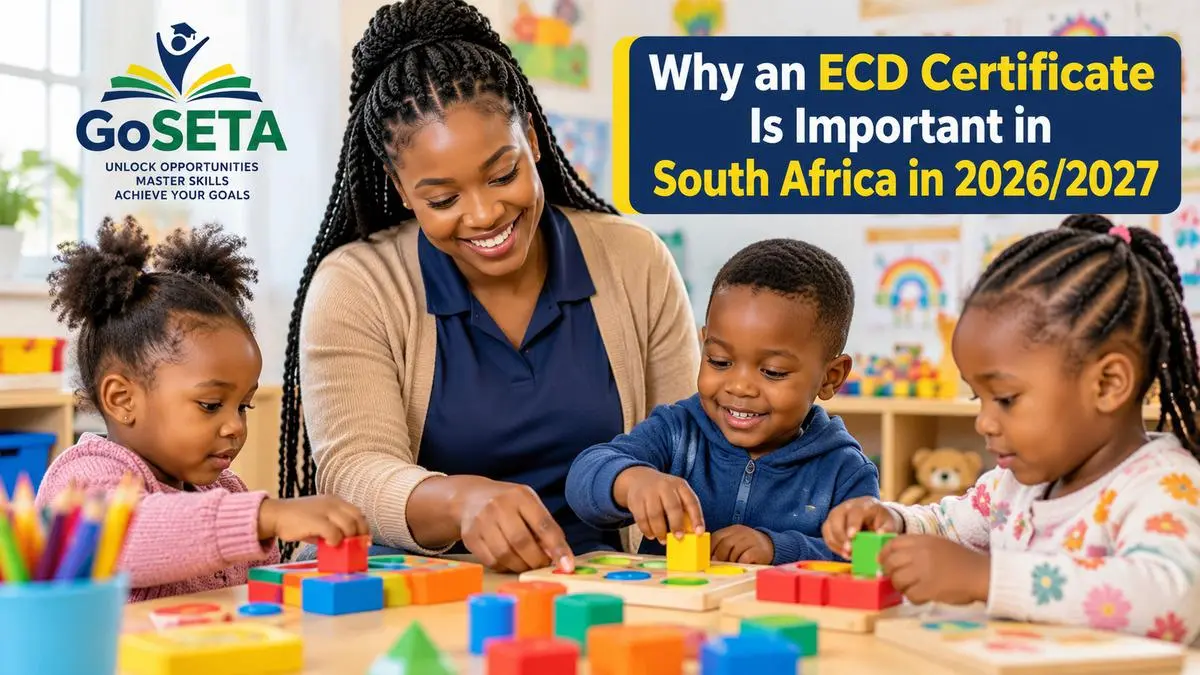
Choosing an Early Childhood Development (ECD) qualification can be an important step for South Africans who want to work with young children or develop their skills in early learning. An ECD certificate can help learners understand how children grow, how to create supportive learning environments and how to contribute to children’s wellbeing. However, the value of a qualification depends on its level, recognition, practical training and relevance to the role a learner wants to pursue.
What Is an ECD Certificate?
An ECD certificate is a qualification or training award related to the care, learning and development of babies, toddlers and young children. Depending on the programme, learners may study child development, play-based learning, health and safety, daily routines, communication and ways to observe children’s progress.
Not every course advertised as an ECD certificate leads to the same qualification. South Africans should check the exact qualification title, National Qualifications Framework (NQF) level, where applicable, and the relevant quality-assurance arrangements before enrolling. The South African Qualifications Authority (SAQA) provides information about qualifications, while the Quality Council for Trades and Occupations (QCTO) provides guidance on occupational qualifications and training providers.
Why Is an ECD Certificate Important in 2026/2027?
1. It builds practical knowledge of child development. Young children have different developmental, emotional and learning needs. Appropriate ECD training can help practitioners plan age-appropriate activities, encourage communication and recognise when a child may need additional support.
2. It supports safer, more organised learning environments. Training may cover hygiene, nutrition, supervision, child protection and routines. These skills can help practitioners think carefully about children’s everyday safety and wellbeing.
3. It can support career development. An appropriate ECD qualification may be relevant to opportunities in early learning centres, community-based programmes and other child-development settings. Some learners may also use it as a starting point for further study. Employment is not guaranteed, and individual positions can have additional qualification or experience requirements.
4. It helps learners understand professional responsibilities. Working with young children involves more than supervising play. Practitioners need patience, communication skills, careful observation and an understanding of inclusive learning. Training can help learners develop these skills and recognise the limits of their responsibilities.
Useful Links
- Funding Bursaries
- Youth Opportunities
- Internship Programme
- Learnership Programme
- Online Courses
- Government Education Updates
What Career Opportunities Can an ECD Qualification Support?
Depending on the qualification, experience and employer’s requirements, possible pathways may include an ECD practitioner role, an assistant position in an early learning setting or further training in early childhood education.
People who want to operate an ECD facility should understand that obtaining a personal training certificate and registering an ECD programme are different processes. The South African Government’s ECD programme certificate guidance explains requirements for programme registration, including qualifications, skills and experience. A certificate alone does not automatically authorise someone to operate a facility.
What Should You Check Before Enrolling?
Before paying for an ECD course in 2026/2027, ask the provider for the full qualification title, NQF level where applicable, course duration, total fees, assessment method and practical-work requirements. Confirm that the provider is authorised to offer that specific qualification through the relevant quality council or authority.
Also ask whether the certificate supports your intended career path, whether further study is possible and what documents are required for registration. A provider’s advertising claims should not replace independent verification.
Documents and Application Preparation
If you are applying for a training programme, prepare documents only according to its published instructions. These may include an identity document, school results, contact details or certified copies, but the exact list depends on the provider. Do not assume that every ECD programme has identical entry requirements.
For funded programmes or learnerships, verify the official announcement, eligibility criteria, location, application method, closing date and stipend, if one is offered. Do not assume that a stipend exists simply because another programme provides one.
Is an ECD Certificate Worth Considering?
For someone interested in early learning, an appropriate ECD qualification can provide structured knowledge, practical preparation and a foundation for further development. The important step is choosing training that matches your goals and has verifiable recognition.
Before enrolling, compare the qualification, provider, costs and career requirements. Making these checks can help you avoid unsuitable courses and choose a learning pathway that fits your circumstances.
