
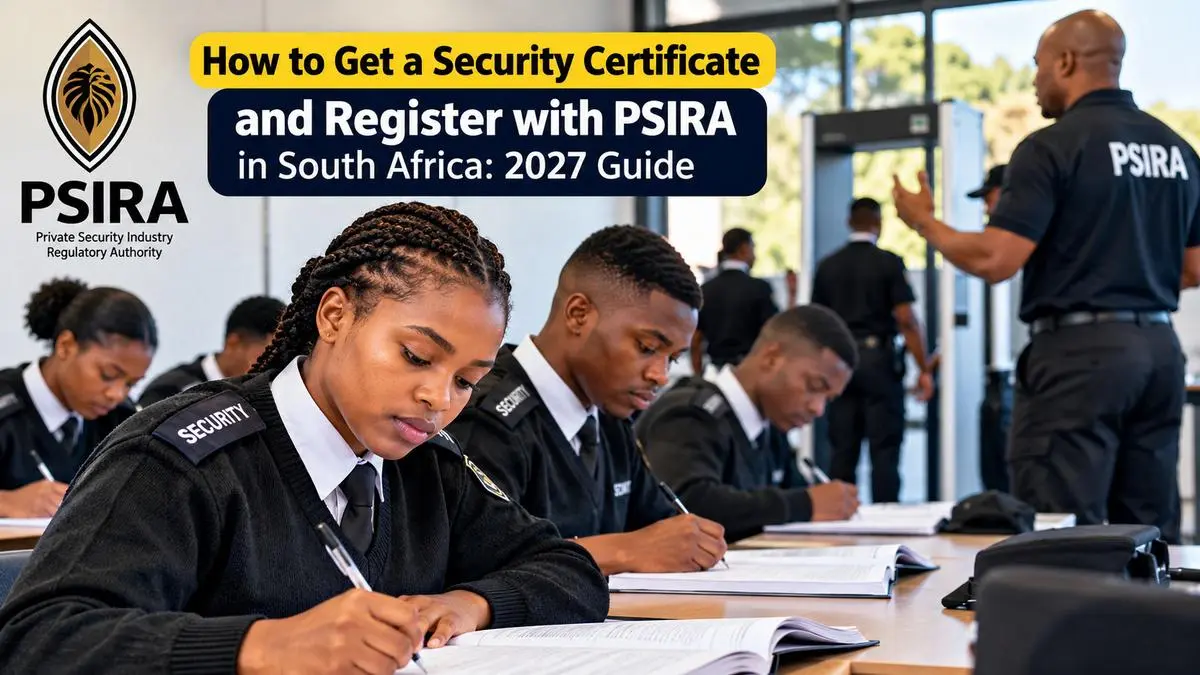
If you are considering a career in private security in South Africa, one of the first things to understand is the difference between security training and PSIRA registration.
Completing a security course and obtaining training documentation does not necessarily mean that you are automatically registered with the Private Security Industry Regulatory Authority (PSIRA). Training, registration and employment are related, but they are separate parts of the process.
This 2027 guide explains the general pathway, what prospective security officers should check before enrolling, which information should be confirmed with the relevant authority and how to avoid relying on outdated advertisements.
Related Opportunities 2026
- Funding Bursaries
- Youth Opportunities
- Internship Programme
- Learnership Programme
- Online Courses
- Government Education Updates
What is PSIRA?
PSIRA is the Private Security Industry Regulatory Authority, the regulatory authority responsible for regulating the private security industry in South Africa.
For someone planning to work in private security, understanding PSIRA is important because registration and compliance requirements can affect whether an individual can legally perform certain security-related duties.
The official PSIRA website should always be treated as the primary source for current registration procedures, requirements and official notices.
Official information: PSIRA Official Website
Security training and PSIRA registration are not the same thing
One of the most common misunderstandings among new applicants is assuming that completing a security course automatically completes the entire PSIRA process.
It is better to think of the process in stages.
First, a prospective security officer needs to establish what training is required for the type of work they want to pursue. The training should be obtained through an appropriate provider and should meet the applicable industry requirements.
The applicant then needs to follow the applicable PSIRA registration process.
This distinction is important because a training provider, an employer and PSIRA may each have different responsibilities.
What changed for 2027?
Applicants should be careful when reading older security-training advertisements online.
An advertisement from a previous year may contain information about fees, training arrangements, registration procedures, locations or documentation that is no longer current.
For 2027, applicants should therefore check the latest information before paying for training or submitting documents.
Rather than assuming that every requirement published on a recruitment website is an official PSIRA requirement, look for the original information from PSIRA or confirm the information directly with the relevant organisation.
Who announced the opportunity?
This question is particularly important when you see an advertisement describing a “PSIRA intake” or “PSIRA application.”
PSIRA registration is not the same thing as a learnership, bursary or employer recruitment programme.
If a private training company advertises security training, that company is not automatically the same organisation as PSIRA.
Applicants should identify exactly who published an advertisement and determine whether it concerns:
- security training;
- PSIRA registration;
- employment;
- a learnership;
- or another programme.
This can prevent applicants from paying for a service they did not intend to purchase.
How to get a security certificate in South Africa
The first step is to determine the type of security work you want to pursue and establish the appropriate training pathway.
A typical process can involve the following:
1. Research the required training
Before registering for a course, find out what training is relevant to the security work you want to perform.
Do not select a course solely because an advertisement promises quick employment or immediate registration.
2. Verify the training provider
Before paying any registration or tuition fee, investigate the training provider and confirm that the programme is appropriate for the intended security career.
Ask the provider which qualification or training outcome you will receive and how it relates to the applicable private-security requirements.
3. Complete the required training
Follow the training provider’s enrolment, attendance, assessment and certification requirements.
Keep copies of your training records and certificates.
4. Prepare your documents
Applicants may need to provide personal and supporting documentation during the relevant processes.
The exact documentation should be confirmed against the latest official instructions rather than copied from an old social-media post.
5. Follow the current PSIRA registration process
After completing the applicable requirements, follow the current PSIRA procedure for registration.
Use official PSIRA information when determining where and how to submit an application.
What documents should applicants prepare?
The exact documents required can depend on the particular process and the current PSIRA requirements.
Applicants should be prepared to provide relevant identification and training documentation where required.
Before submitting anything, check the latest official instructions and make sure that:
- your personal details are correct;
- your identification documents are valid and legible;
- your training documentation is available;
- names and dates are consistent across documents;
- copies are clear;
- you keep copies of everything submitted.
Do not rely on a random checklist posted online if it conflicts with current official instructions.
Is there a PSIRA application fee?
Applicants should distinguish between training costs and PSIRA-related charges.
A training provider may charge for tuition, assessments, materials or other services. Those charges are separate from any official regulatory fees that may apply.
Because fees and administrative requirements can change, this article does not present an old fee as a guaranteed 2027 price.
Always verify the current amount through official PSIRA information before making payment.
Is there a closing date?
PSIRA registration should not automatically be treated like a learnership or bursary with one annual closing date.
If you see an advertisement claiming that “PSIRA applications close” on a particular date, check what the advertisement is actually offering.
It may be referring to a training intake, recruitment campaign or application period created by a private organisation rather than a general PSIRA registration deadline.
This distinction is important.
Where can security officers work?
Security training can lead to different career pathways within the private-security industry, depending on the individual’s training, registration status, experience and employer requirements.
Potential areas can include guarding services, access control, security operations and other private-security functions.
However, completing a course should not be interpreted as a guarantee of employment.
Employers can have their own recruitment requirements, and applicants should carefully read the requirements for each vacancy.
Application tips for first-time applicants
If you are starting the process in 2027, these practical steps can reduce avoidable problems.
Check before paying
Do not transfer money simply because an advertisement uses the PSIRA name or logo.
Identify the organisation behind the advertisement and confirm the service being offered.
Keep your paperwork
Create a digital folder containing your identification documents, training records, certificates, receipts and correspondence.
This can make future applications and verification much easier.
Be careful with employment promises
Statements such as “guaranteed job,” “guaranteed PSIRA registration” or “instant certificate” should be treated cautiously.
A legitimate training or registration process should be explained clearly.
Check dates
An advertisement published several years ago may still appear in search results or social media feeds.
Always look for the publication date and compare the information with current official sources.
What applicants should verify before submitting
Before committing to a security course or registration process, ask these questions:
Training: Is the training appropriate for the security role I want?
Provider: Can the provider demonstrate that its training is legitimate and relevant?
Registration: What is the current PSIRA registration procedure?
Documents: Which documents are currently required?
Fees: What will I actually have to pay, and to whom?
Location: Where will training, assessment or registration-related activities take place?
Closing date: Is there genuinely a deadline, or is this simply a training intake?
Certificate: What certificate or proof of training will I receive?
Employment: Is employment actually being offered, or is the advertisement only for training?
Where to get official PSIRA information
Because requirements, procedures and fees can change, applicants should verify important information directly with PSIRA before submitting an application or paying a training provider.
Official PSIRA website: Visit PSIRA for official information
The official source should take priority over social-media posts, forwarded WhatsApp messages and old recruitment articles.
Final thoughts
Becoming a security officer in South Africa involves more than simply obtaining a certificate.
Prospective applicants should understand the difference between security training, PSIRA registration and employment. They should also verify the training provider, keep their documents safe and check current official requirements before paying money or submitting an application.
For 2027, the safest approach is to use current information from PSIRA and treat older online advertisements as potentially outdated.
